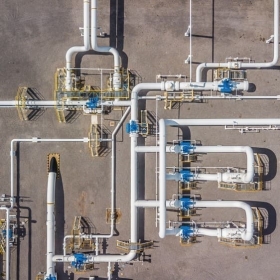
The global demand for cleaner energy has positioned liquefied natural gas (LNG) as a critical component of the modern energy mix. To effectively transport and store LNG, the entire supply chain—from production and liquefaction to shipping, storage, and regasification—requires components capable of withstanding cryogenic temperatures as low as -162°C.
Among these components, low-temperature flanges play an essential role in maintaining structural integrity and leak-free performance of critical connections. This article explores the applications of low-temperature flanges in LNG systems, covering materials, design standards, sealing considerations, and engineering challenges.
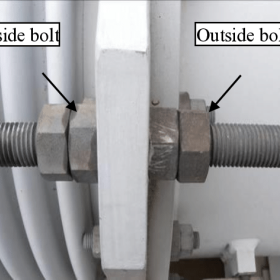
Choosing the correct bolt length for a flange connection is critical to ensuring proper sealing, mechanical integrity, and long-term reliability of piping systems. Bolts that are too short may fail to provide sufficient clamping force, while overly long bolts can interfere with surrounding equipment or cause uneven stress distribution.
This guide from Sunjin Metals Vina (SJM Vina) explains how to accurately select bolt length for flanges by considering industry standards, gasket thickness, washer usage, and installation tolerances.
Sunjin Metals Vina, is a trusted supplier of high-quality steel pipes, flanges, and fittings sourced from South Korea and other countries, fully compliant with international standards.
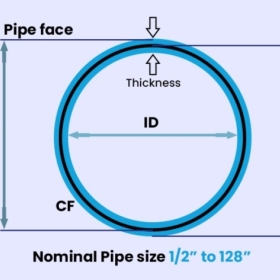
In the realm of piping and flange systems, understanding Nominal Pipe Size (NPS) and Outer Diameter (OD) is essential for engineers, technicians, and procurement professionals. Confusion often arises when converting between NPS and OD, particularly when dealing with international standards, engineering drawings, or flange selection.
This detailed guide explains how to convert flange NPS to OD, why it matters, and how to avoid errors during flange sourcing and installation. Sunjin Metals Vina (SJM Vina) supports global customers with precise flange dimensioning, custom manufacturing, and expert technical consultation.
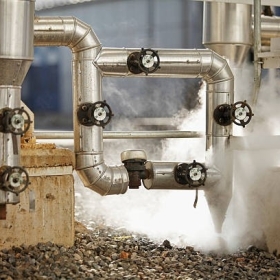
Steam systems are critical in industries such as power generation, chemical processing, food production, and heating networks. These systems operate under high temperatures and pressures, making the selection of components crucial for safety, reliability, and efficiency. Flanges play an essential role in steam service by connecting pipes, valves, and equipment. Choosing the right flange for steam applications ensures the system operates reliably under demanding conditions.
This article explores the optimal flange types, materials, and standards for steam applications, and how Sunjin Metals Vina (SJM Vina) supports industrial operations with high-quality flange solutions.
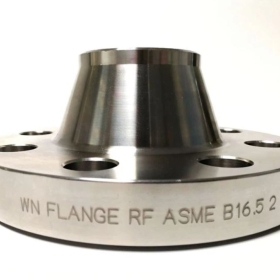
In the realm of industrial piping, flanges are essential components for connecting pipes, valves, pumps, and other equipment. To ensure safety, reliability, and compatibility, flanges must adhere to established standards. One of the most widely adopted standards is ASME B16.5, which governs the dimensions, materials, and pressure-temperature ratings for flanges up to 24 inches in nominal size.
A critical aspect of the ASME B16.5 standard is the concept of flange classes, which define the pressure and temperature capabilities of a flange. Understanding these flange classes is vital for designing, specifying, or procuring flanges for industrial applications.
This article explains what ASME B16.5 flange classes are, their impact on performance, and how to select the appropriate class for your system. Whether you operate in oil and gas, petrochemicals, water treatment, or construction, this guide will assist you in making informed flange selection decisions.
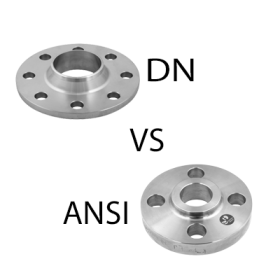
Flanges play a critical role in pipeline systems, serving as the connection point for pipes, valves, and fittings. Around the world, different standards are applied depending on the region, with DIN and ANSI being the two most widely used. Understanding the differences between these standards is essential for ensuring compatibility, safety, and efficiency in industrial projects.
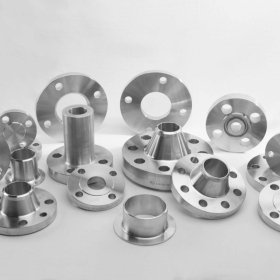
In industrial piping systems, flanges are essential components that connect steel pipes, valves, pumps, and other equipment with secure and leak-proof joints. Flanges not only ensure pressure and temperature resistance but also allow convenient assembly, disassembly, inspection, and maintenance.
Among various flange standards, ANSI flanges are widely used across the globe due to their consistency, safety, and reliability. Developed by the American National Standards Institute (ANSI), the most recognized reference is ANSI B16.5, which specifies dimensions, tolerances, materials, and pressure ratings for flanges ranging from ½ inch to 24 inches.
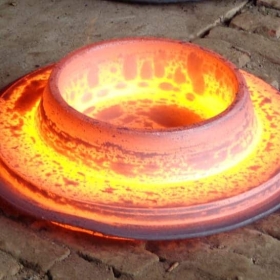
The oil and gas industry is one of the most demanding sectors worldwide, where materials and components must withstand extreme pressure, high temperatures, and highly corrosive environments. Among the critical components used in pipeline systems, refineries, offshore rigs, and petrochemical plants, forged flanges play a vital role in ensuring strong, safe, and leak-free connections.