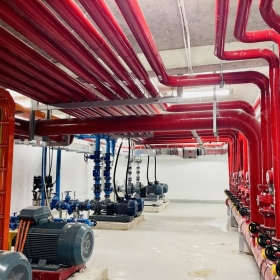
In firefighting systems, water pipelines act as the lifeline, ensuring water is delivered promptly and effectively to extinguish fires. The quality and standards of steel pipes used in these systems are critical to the safe, stable, and long-term performance of the entire facility.
In Vietnam, as well as globally, firefighting pipe standards are strictly regulated to ensure the products meet durability, pressure resistance, and safety requirements in harsh conditions.
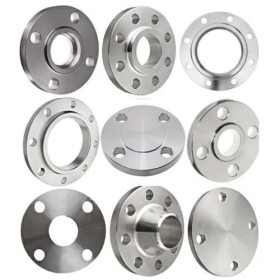
European flange standards (BS EN/DIN EN 1092) are widely applied in industrial machinery, pipelines, and pressure systems across Europe and other regions. These standards provide detailed specifications on dimensions, tolerances, materials, and pressure ratings, ensuring safety, compatibility, and durability of flange connections.
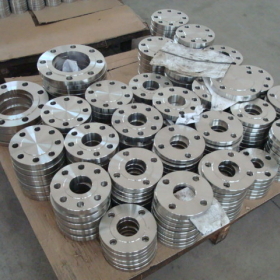
American flange standards, issued by ASME/ANSI (American Society of Mechanical Engineers / American National Standards Institute), are widely recognized and applied in global industries such as oil & gas, petrochemicals, power generation, and heavy industry. These standards provide detailed specifications for pressure ratings, materials, dimensions, and flange types, ensuring safety and compatibility across critical piping systems.
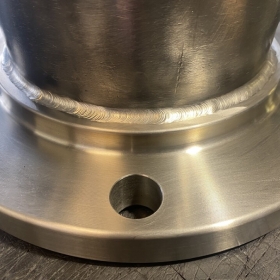
In industrial piping systems, stainless steel flanges are indispensable components, commonly connected to steel pipes or other equipment through welding. However, if the welding process is not performed with proper techniques, weld cracks may occur, directly affecting mechanical strength, sealing capability, and the service life of the system.
So, what causes stainless steel flanges to crack during welding, and what are the solutions? In this article, Sunjin Metals Vina (SJM Vina) provides a detailed technical analysis.
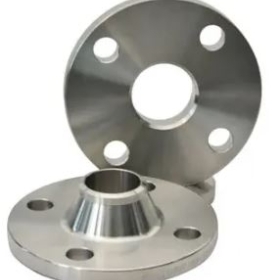
In industrial piping systems, selecting the right type of flange connection is crucial to ensure safety, efficiency, and durability. Among the most commonly used flange types, Flat Flanges (also known as Plate Flanges) and Weld Neck Flanges are two options that engineers often evaluate. Although both serve the same purpose—connecting pipes, valves, or equipment—they differ significantly in structure, performance, and application range.
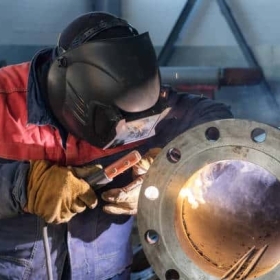
Weld neck flanges are widely applied in industrial pipeline systems, especially in environments with high pressure and high temperature. To ensure the safety and durability of these connections, welding techniques must be executed with precision and strict compliance with operational standards. This article explores welding techniques and safety precautions for weld neck flanges, providing a reliable technical perspective for businesses and engineers in the field of piping and fittings.
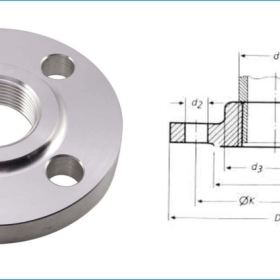
Threaded flanges are a specialized type of pipe connection component that allow pipelines to be joined more efficiently and conveniently. Thanks to their unique design, threaded flanges can be directly connected to pipes without welding. This feature not only simplifies the installation process but also minimizes safety risks associated with welding. At Sunjin Metals Vina, we emphasize that proper installation is essential to ensure the long-term safety, reliability, and performance of pipeline systems.
Below is a comprehensive guide to the correct installation process for threaded flanges.
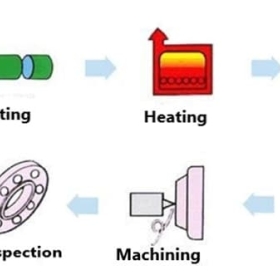
Steel flanges are a crucial component in industrial piping systems, especially in sectors requiring high safety and durability such as oil & gas, chemicals, energy, and shipbuilding. Among the manufacturing methods for flanges, forging is highly valued for producing products with superior mechanical properties, uniform metal structure, and excellent pressure resistance.
The flange forging process must meet strict technical requirements to ensure that the final product achieves quality standards and is suitable for operating conditions. Below are 5 key technical requirements in this process.